
Experience
Representative projects show the questions we investigated, the work performed, and the resulting findings or reported outcomes.
Summaries respect client confidentiality. Illustrations are conceptual and contain no client data.
Representative Work
Marine and Transport Systems
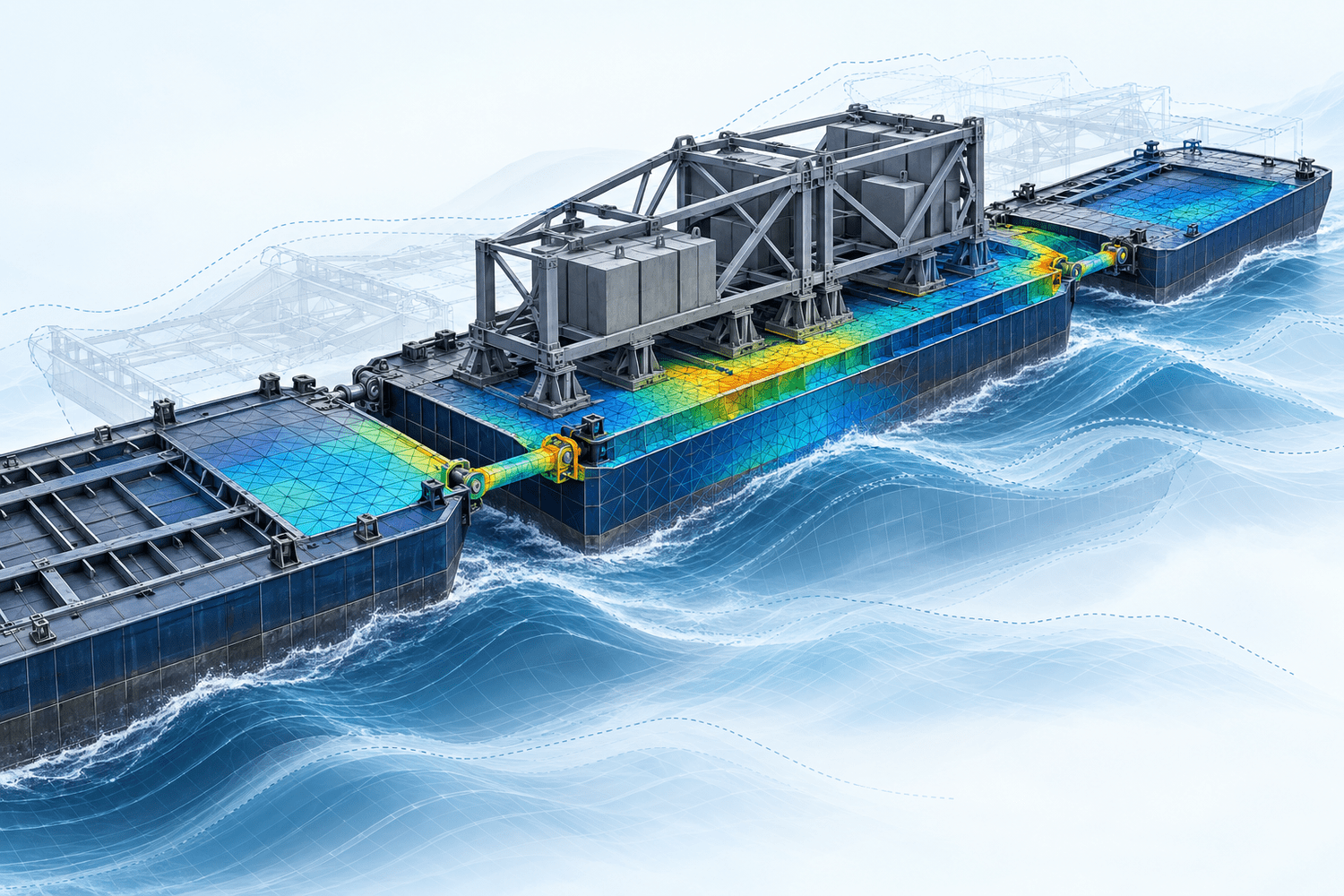
Analysis of connected assemblies under changing load and environmental conditions.
Marine and transport project detailsCapabilities: Structural Analysis
Modular Barge Response
- Challenge
- Changing loads and environmental conditions affected a coupled barge assembly.
- Work performed
- Evaluated mechanical response and reliability across the defined conditions.
- Result
- An analysis of assembly response and reliability under the evaluated scenarios.
Load Paths and Stability
- Challenge
- Production teams needed to understand how geometry and connection details influenced reliability.
- Work performed
- Reviewed load paths, frame geometry, and connection detailing.
- Result
- Clarified how those features affected long-term reliability.
Structural and Product Optimization
Project examples involving frame efficiency, welded components, connections, and repeatable product systems.
Pre-Engineered Frame Optimization
- Challenge
- Reduce material usage while retaining the required stiffness and stability.
- Work performed
- Evaluated frame refinements against stiffness and stability envelopes.
- Result
- Reduced material usage within envelopes validated by the Engineer of Record.
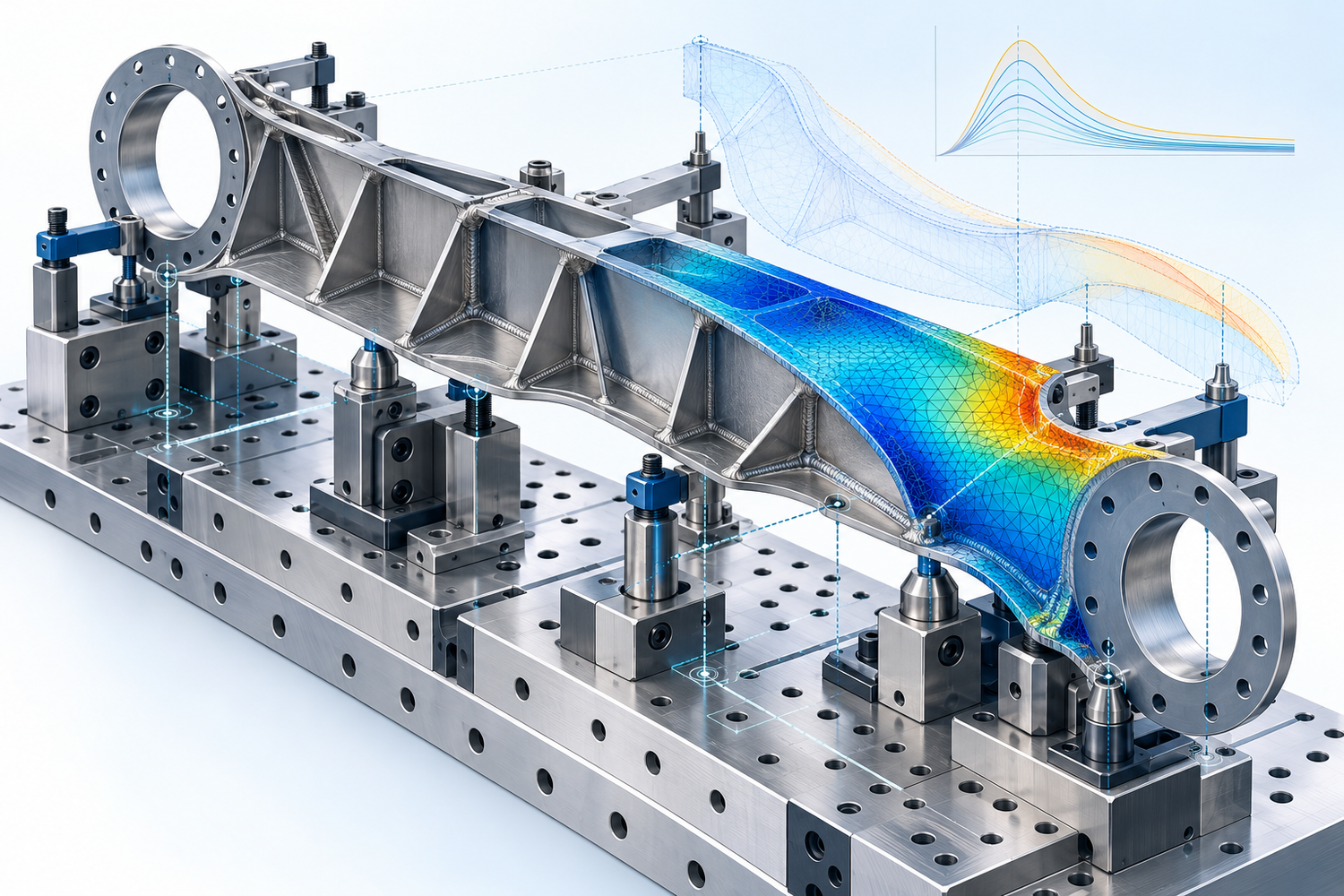
Welded Component Reliability
- Challenge
- Deformation and fatigue in welded assemblies needed investigation.
- Work performed
- Applied sensitivity analysis and design of experiments to identify influential variables.
- Result
- Identified key drivers of deformation and fatigue to guide refinement.
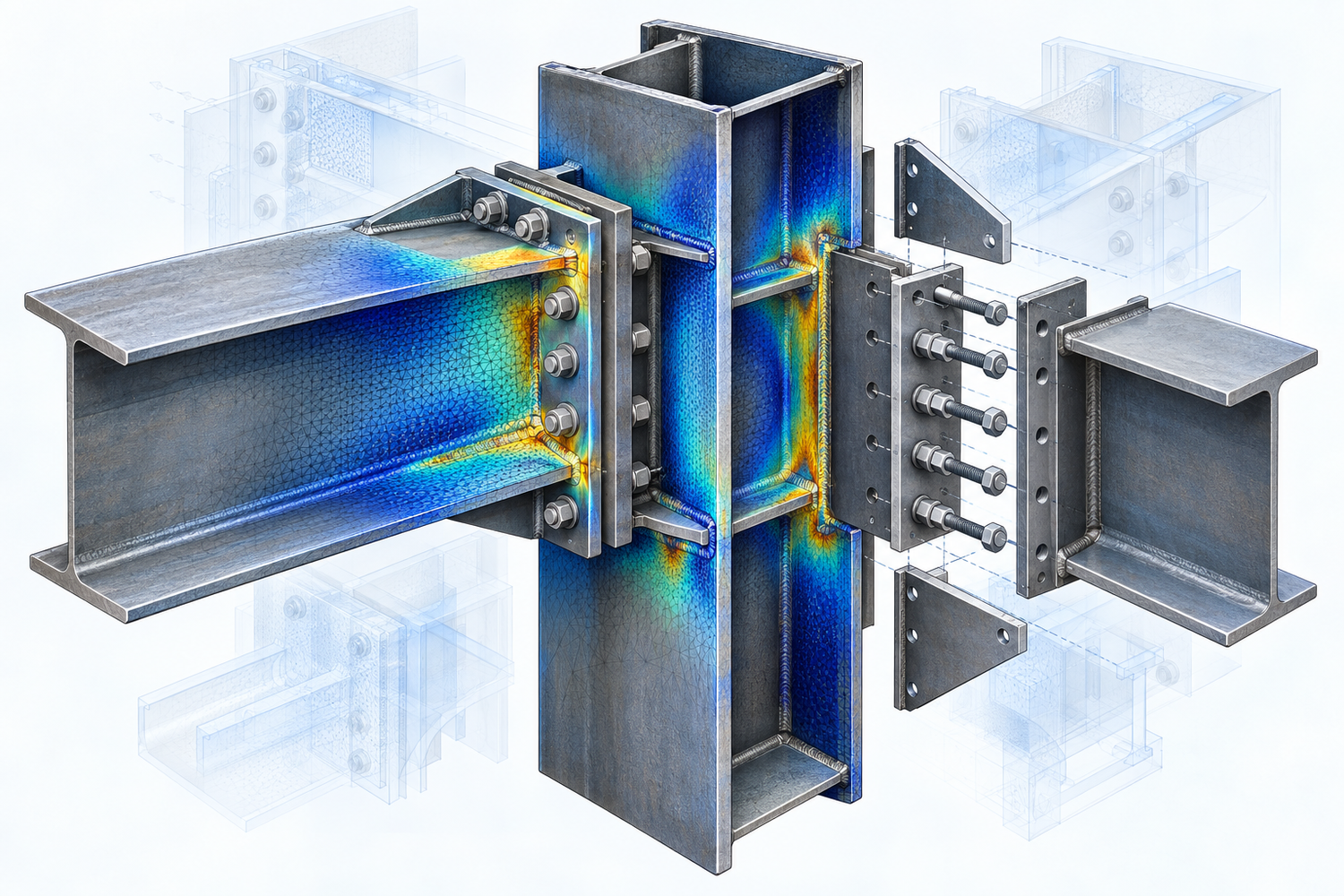
Connection Refinement
- Challenge
- Joint behavior limited stiffness and contributed to creep or distortion. Connection details needed attention because movement at a joint can affect the response of the whole assembly, even when the individual components are adequate.
- Work performed
- Supported manufacturers in adjusting joint geometry to address the observed behavior. Refinement focused on the connection as part of the wider system, balancing the desired stiffness with the need to limit longer-term movement or distortion.
- Result
- Improved stiffness and reduced long-term creep or distortion. The refinements addressed a limiting feature of the assembly and supported more reliable behavior at the connection.
Repeatable Building-Series Optimization
- Challenge
- Find material-saving opportunities in selected product configurations.
- Work performed
- Identified optimization opportunities while preserving required performance objectives.
- Result
- Approximately 30–40% material reductions in selected configurations; final design implementation subject to Engineer-of-Record review.
More structural project examplesCapabilities: Product Optimization
Building-Series Behavior Review
- Challenge
- A long-running series showed higher real-world reliability than expected.
- Work performed
- Investigated the behavioral drivers behind its observed performance.
- Result
- Clarified those drivers and supported refinement of engineering assumptions.
Lightweight Roof Deflection
- Challenge
- Unexpected deflection patterns required interpretation.
- Work performed
- Helped the team interpret the response and evaluate detailing.
- Result
- Identified detailing changes for the Engineer of Record to evaluate.
Manufacturing Process and Reliability
Investigations of assembly variation, thermal deformation, and observed product performance.
Multi-Step Assembly Variation
- Challenge
- Dimensional inconsistency accumulated across assembly steps.
- Work performed
- Mapped sources of inconsistency and recommended workflow adjustments.
- Result
- Workflow recommendations targeted the identified sources of variation.
Thermal-Process Fixtures
- Challenge
- Heat-based manufacturing cycles could deform the product.
- Work performed
- Modeled fixture configurations to minimize deformation.
- Result
- Improved consistency across production runs.
Reliability and Field Performance
- Challenge
- Teams needed to interpret the factors shaping real-world performance.
- Work performed
- Examined design lineage, manufacturing variation, and installation practices.
- Result
- Clarified how those factors influenced observed performance.
Further simulation studiesCapabilities: Simulation & Reliability
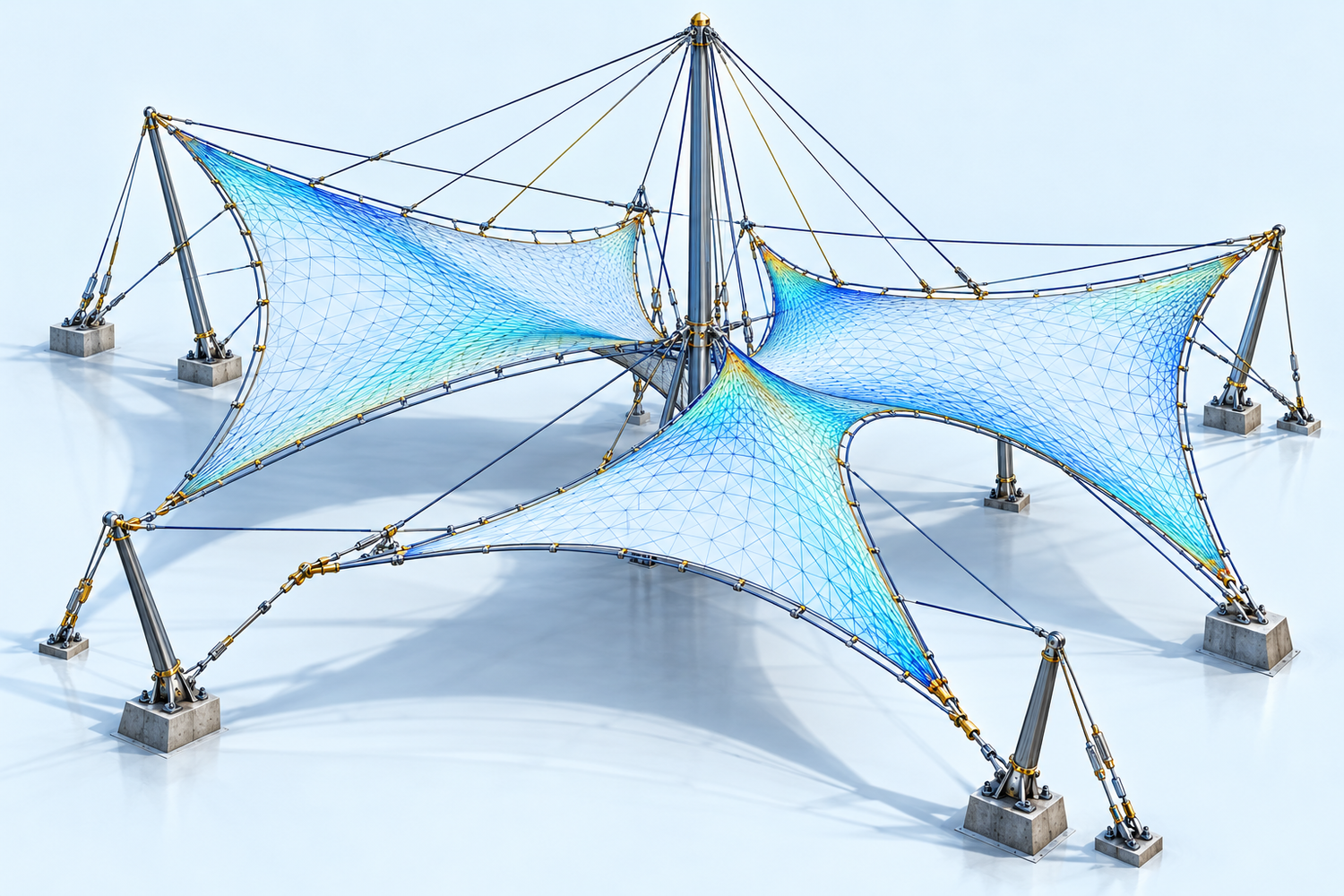
Nonlinear Membrane Response
- Challenge
- A membrane-structure model had convergence issues.
- Work performed
- Clarified boundary assumptions and investigated nonlinear behavior.
- Result
- Resolved convergence issues and identified the behavioral envelope.
Composite-Part Stress Concentrations
- Challenge
- The variables driving local stress concentrations were unclear.
- Work performed
- Used a design-of-experiments reliability study to compare their influence.
- Result
- Identified the most influential variables, guiding design adjustments.
Blast Design
This work brings structural dynamics into the evaluation of protective systems and their response to short-duration loading.
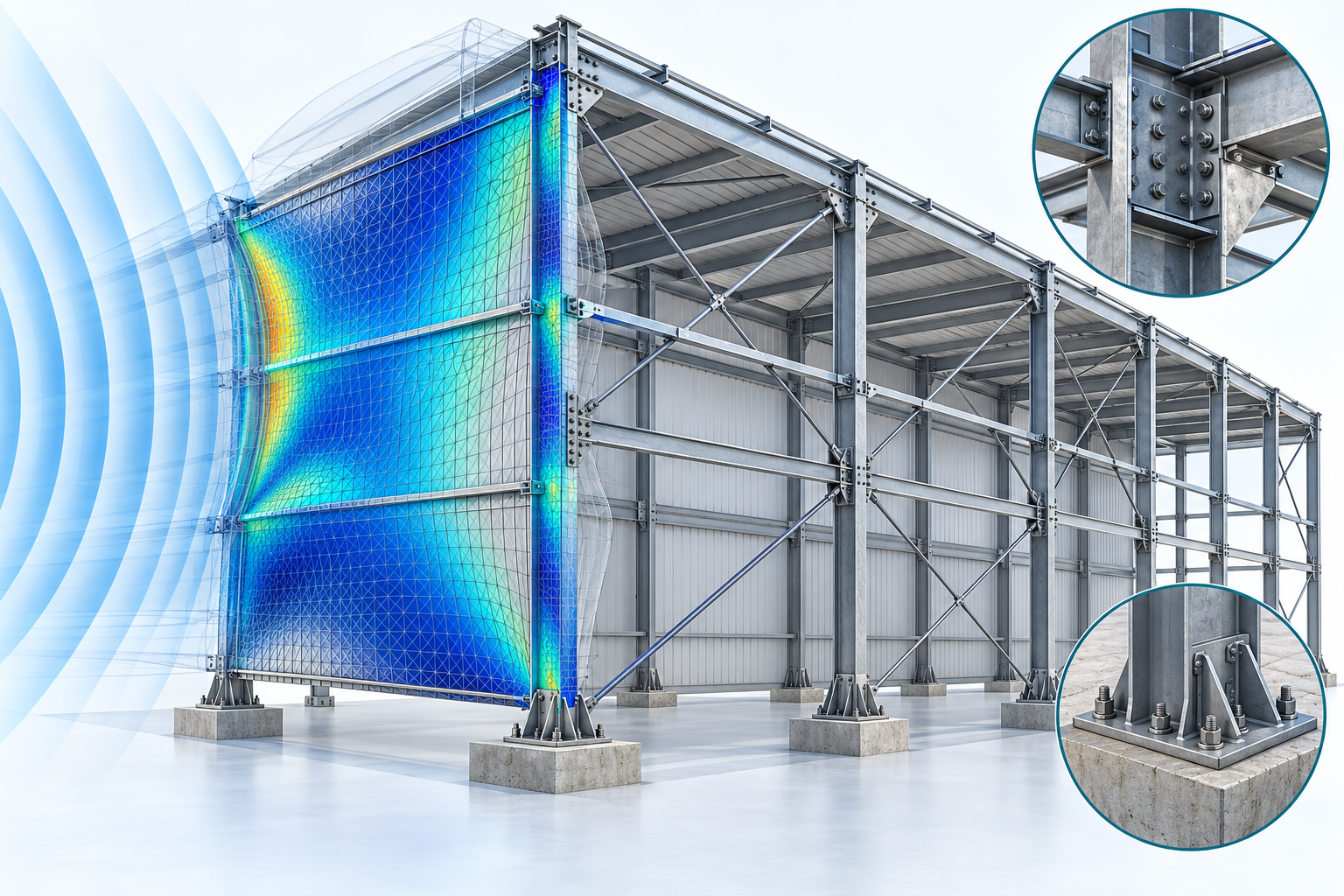
Blast design scope and referenceCapabilities: Blast Design
Catlow’s experience includes blast design informed by TM 5-1300, Structures to Resist the Effects of Accidental Explosions. This work brings structural dynamics into the evaluation of protective systems and their response to short-duration loading.
For the analytical scope, loading considerations, and technical reference, see Blast Design & Dynamic Response on the Capabilities page.
Collaborative Technical Support
We often begin with the manufacturer and coordinate closely with its engineering teams. Our role is to clarify system behavior, evaluate options, and provide structured analysis that informs engineering decisions.
Industries Served
Start a Conversation
Have a structural or manufacturing challenge to work through? Contact us to discuss the question, available information, and whether our capabilities are a fit.
Tell us about your product or system, what you’re observing, and the decision you need to make.
Contact Catlow Consulting